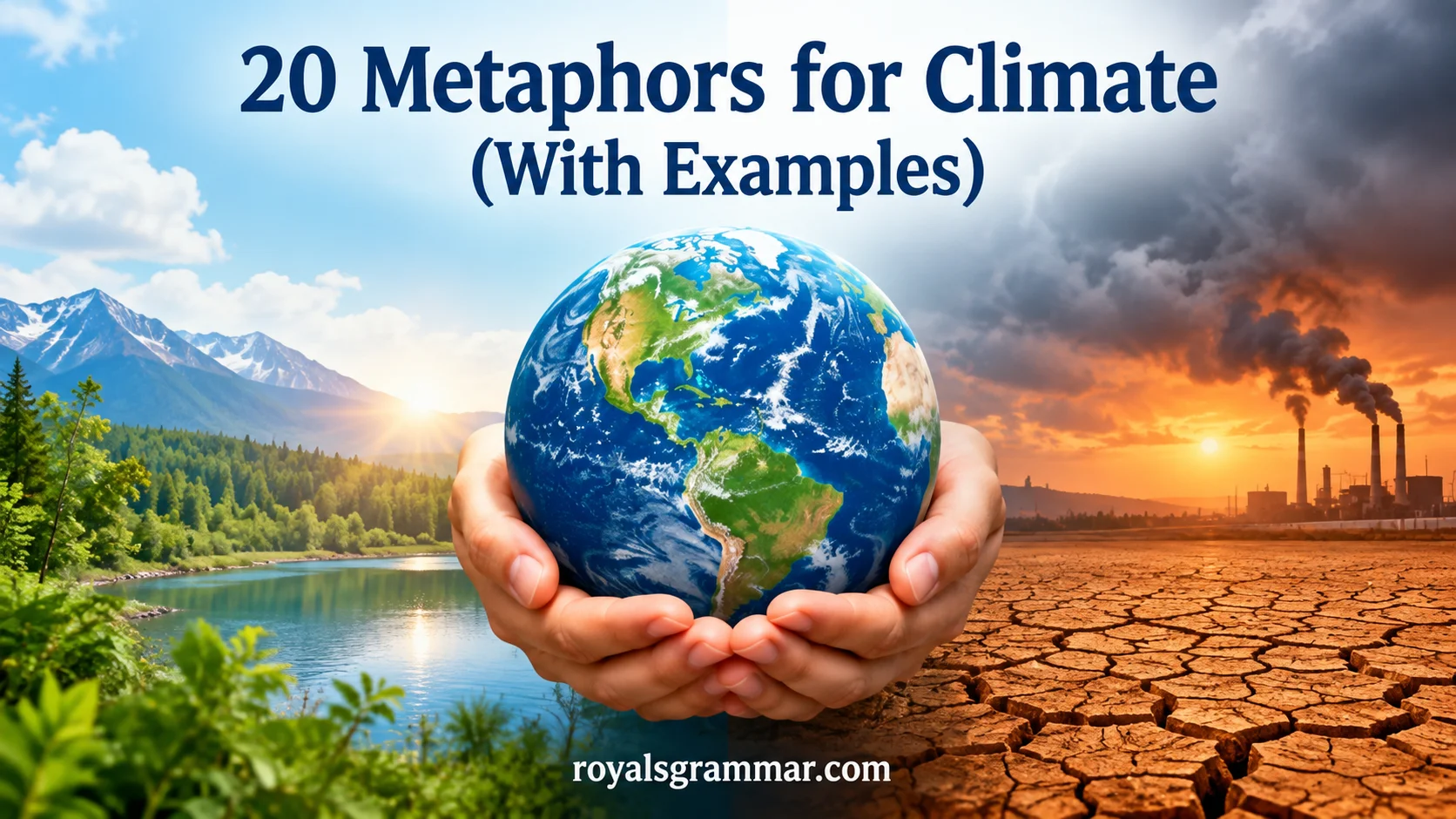
Metaphors for Climate Change (With Examples) help explain climate change as a story of a planet under pressure. A rise in temperature and rapid transformation can be difficult to see, so powerful images make complex scientific ideas more human and relatable. A ticking clock, warning signal, or slow-moving storm can express urgency, emotion, and environmental change clearly. These effective metaphors help readers understand, feel, and remember important ideas.
Good language creates a bridge between scientific ideas and everyday conversations. Through thoughtful language choices, expressions, and clear communication, writers can make abstract environmental issues easier to understand in an essay, speech, poem, or article. Strong English usage, grammar, consistency, tone, warmth, and clarity also help make climate writing professional and easy to understand, whether used for work, study, or meaningful everyday dialogue.
1. Climate Change Is a Ticking Clock
Meaning: This metaphor describes climate change as a situation that requires timely action.
Detailed Explanation: A ticking clock represents passing time. When climate change is compared with a clock, it emphasizes that environmental decisions made today can affect future generations. The expression creates a sense of urgency without needing complicated scientific language.
Example: Climate change is a ticking clock, reminding us that responsible choices cannot be postponed forever.
3 Other Ways to Say It:
- Climate change is a race against time.
- Climate change is a countdown to action.
- Climate change is time slipping away.
2. Climate Change Is a Warming Blanket
Meaning: This metaphor describes the heat-trapping effect associated with increasing greenhouse gases.
Detailed Explanation: A blanket keeps warmth from escaping. In a similar figurative sense, the atmosphere can be described as a blanket that holds more heat when greenhouse gas concentrations increase. This makes the concept easier to visualize.
Example: Rising greenhouse gases are like a warming blanket wrapped around the planet.
3 Other Ways to Say It:
- The atmosphere is holding in more heat.
- Greenhouse gases are a heat-trapping layer.
- Earth is under an increasingly warm cover.
3. Climate Change Is a Fever
Meaning: This metaphor compares a warming planet with a human body experiencing a fever.
Detailed Explanation: A fever signals that something is wrong with the body. Describing Earth as having a fever communicates that unusual warming is a warning sign requiring attention and care.
Example: The planet’s rising temperature can feel like a fever calling for careful attention.
3 Other Ways to Say It:
- Earth is running a temperature.
- The planet is showing signs of overheating.
- Global warming is an environmental warning signal.
4. Climate Change Is a Storm on the Horizon
Meaning: This metaphor represents climate change as a growing challenge that demands preparation.
Detailed Explanation: A storm on the horizon may not have arrived yet, but people can see signs that it is approaching. The metaphor highlights how climate-related risks can require preparation, adaptation, and thoughtful planning.
Example: Climate change is like a storm on the horizon, encouraging communities to prepare before conditions become more difficult.
3 Other Ways to Say It:
- Climate change is a gathering storm.
- Climate risks are clouds approaching.
- The future holds an environmental storm.
5. Climate Change Is a Domino Effect
Meaning: This metaphor describes how one environmental change can contribute to other connected consequences.
Detailed Explanation: When one domino falls, it can knock over another. Climate systems are interconnected, so changes in temperature, rainfall, oceans, ecosystems, and other conditions can influence one another.
Example: Climate change can create a domino effect, with one environmental disruption affecting many connected systems.
3 Other Ways to Say It:
- Climate change creates a chain reaction.
- Environmental changes can trigger one another.
- One disruption can set off another.
6. Climate Change Is a Burning Warning
Meaning: This metaphor presents climate change as a serious signal that deserves attention.
Detailed Explanation: Fire is commonly associated with danger and urgency. Calling climate change a burning warning emphasizes the importance of recognizing environmental changes and responding responsibly.
Example: Record-breaking heat can serve as a burning warning about the challenges of a changing climate.
3 Other Ways to Say It:
- Climate change is a flashing warning sign.
- Climate change is an urgent environmental alarm.
- Climate change is a call for immediate attention.
7. Climate Change Is a Wounded Earth
Meaning: This metaphor presents environmental damage as an injury to the natural world.
Detailed Explanation: The word “wounded” creates an emotional image of something needing care. It can be used when discussing damaged ecosystems, declining habitats, pollution, and other environmental concerns.
Example: Protecting forests and oceans can help care for a wounded Earth.
3 Other Ways to Say It:
- The planet is under strain.
- Nature carries environmental scars.
- Earth is in need of healing.
8. Climate Change Is a Rising Tide
Meaning: This metaphor represents climate change as a growing challenge that is becoming increasingly difficult to ignore.
Detailed Explanation: A rising tide gradually covers more land. Figuratively, the phrase can describe climate-related pressures that grow over time and affect communities, ecosystems, and economies.
Example: Climate change is like a rising tide, gradually creating new challenges for communities around the world.
3 Other Ways to Say It:
- Climate change is a growing wave.
- Environmental pressure is building.
- Climate risks are steadily increasing.
9. Climate Change Is a Shifting Puzzle
Meaning: This metaphor describes climate change as a complex problem with many connected parts.
Detailed Explanation: A puzzle contains many pieces that must fit together. Climate change involves the atmosphere, oceans, ecosystems, energy systems, communities, technology, and human decisions. Understanding the whole picture requires considering these connections.
Example: Climate change is a shifting puzzle, with environmental and social pieces constantly influencing one another.
3 Other Ways to Say It:
- Climate change is a complex web.
- Climate change is a many-sided challenge.
- The climate is a system of connected pieces.
10. Climate Change Is a Silent Thief
Meaning: This metaphor describes climate change as something that can gradually take away natural resources, stability, and opportunities.
Detailed Explanation: A thief takes something without permission. The metaphor can express how environmental changes may gradually affect habitats, agricultural conditions, biodiversity, and other things people value.
Example: Climate change can act like a silent thief, gradually changing places that communities have depended on for generations.
3 Other Ways to Say It:
- Climate change is a gradual loss.
- Environmental change can quietly take its toll.
- Climate risks can erode what we value.
11. Climate Change Is a Mirror
Meaning: This metaphor suggests that climate change reflects the consequences of human choices and systems.
Detailed Explanation: A mirror shows a reflection. In this metaphor, climate change encourages society to examine patterns involving energy, transportation, consumption, land use, and environmental responsibility.
Example: Climate change can serve as a mirror, encouraging societies to examine how their choices affect the planet.
3 Other Ways to Say It:
- Climate change is a reflection of our choices.
- The climate holds up a mirror to society.
- Environmental change reveals our collective impact.
12. Climate Change Is a Heavy Footprint
Meaning: This metaphor describes the lasting environmental impact of human activities.
Detailed Explanation: A footprint represents the mark left behind after someone passes through an area. A heavy footprint suggests that certain activities leave a significant environmental effect.
Example: High-emission activities can leave a heavy footprint on the planet.
3 Other Ways to Say It:
- Human activity leaves an environmental mark.
- Society has a large ecological footprint.
- Our choices leave traces on nature.
13. Climate Change Is a Fraying Safety Net
Meaning: This metaphor describes climate change as putting pressure on natural and social systems that provide protection and support.
Detailed Explanation: A safety net catches people when they fall. In environmental discussions, ecosystems, infrastructure, food systems, and community resources can sometimes be viewed as forms of protection. Climate-related pressures may weaken these supports.
Example: Healthy ecosystems can act as a safety net, while climate change may leave that net increasingly frayed.
3 Other Ways to Say It:
- Climate change is weakening our protective systems.
- Natural defenses are under increasing pressure.
- Environmental support systems are being stretched.
14. Climate Change Is a Wake-Up Call
Meaning: This metaphor describes climate change as a strong reason to pay attention and reconsider our actions.
Detailed Explanation: A wake-up call interrupts sleep and demands attention. The metaphor is useful when discussing the need for greater awareness, preparation, and responsible environmental decisions.
Example: Climate-related changes can become a wake-up call for communities to reconsider how they use energy and resources.
3 Other Ways to Say It:
- Climate change is a call to action.
- Environmental change is an alarm bell.
- The climate crisis is a reminder to act responsibly.
15. Climate Change Is a Broken Balance
Meaning: This metaphor describes climate change as a disruption of natural and environmental equilibrium.
Detailed Explanation: Balance suggests stability between different parts of a system. When that balance changes, ecosystems and human communities may face new conditions. This metaphor is especially useful for explaining interconnected environmental systems.
Example: Climate change can disturb the delicate balance between ecosystems, weather patterns, and human communities.
3 Other Ways to Say It:
- Climate change is an upset equilibrium.
- Nature’s balance is being disrupted.
- The environmental system is losing stability.
Read More: 20 Metaphors for Comfort (With Examples)
16. Climate Change Is a Fork in the Road
Meaning: This metaphor represents important choices about how society responds to climate change.
Detailed Explanation: At a fork in the road, travelers must choose a direction. The metaphor highlights that present decisions can influence future environmental and social conditions.
Example: Climate change places society at a fork in the road, where today’s choices can shape tomorrow’s conditions.
3 Other Ways to Say It:
- Climate change presents a crossroads.
- Society is facing a choice of directions.
- The future depends on decisions made today.
17. Climate Change Is a Ripple Through the World
Meaning: This metaphor describes how climate-related changes can spread through interconnected systems.
Detailed Explanation: A ripple begins at one point and moves outward. Similarly, an environmental change can affect ecosystems, agriculture, water resources, communities, and other connected areas.
Example: A change in climate can create ripples through the world, affecting both natural and human systems.
3 Other Ways to Say It:
- Climate change creates waves of consequences.
- Environmental changes spread outward.
- Climate impacts can echo across communities.
18. Climate Change Is a Message from Nature
Meaning: This metaphor portrays environmental changes as signals that encourage people to pay attention to nature.
Detailed Explanation: Nature does not literally send messages, but changes in ecosystems and weather can provide information about environmental conditions. The metaphor gives those observations an accessible and reflective meaning.
Example: Changes in forests, oceans, and weather can feel like messages from nature, encouraging us to observe the planet more carefully.
3 Other Ways to Say It:
- Nature is sending signals.
- Environmental changes are signs from the natural world.
- The planet is showing us what is changing.
19. Climate Change Is a Shared Journey
Meaning: This metaphor emphasizes that climate change affects people and communities across the world.
Detailed Explanation: A journey involves movement, decisions, challenges, and destinations. Calling climate action a shared journey emphasizes cooperation, responsibility, adaptation, and long-term thinking.
Example: Addressing climate change is a shared journey, requiring cooperation across communities and generations.
3 Other Ways to Say It:
- Climate action is a collective path.
- The climate challenge is a journey we share.
- Protecting the planet is a common responsibility.
20. Climate Change Is a Story We Are Still Writing
Meaning: This metaphor suggests that the future of climate change and society’s response is still developing.
Detailed Explanation: A story changes as new chapters are written. This metaphor emphasizes that current decisions, technologies, policies, and individual actions contribute to the ongoing story of humanity’s relationship with the environment.
Example: Climate change is a story we are still writing, and today’s choices can become part of tomorrow’s chapter.
3 Other Ways to Say It:
- The future is still being shaped.
- Humanity is writing the next chapter.
- Our environmental story is still unfolding.
Exercise: Practice Climate Change Metaphors
Choose the correct answer for each question.
1. What does “Climate change is a ticking clock” emphasize?
A. Entertainment
B. Urgency
C. Silence
D. Celebration
2. Which metaphor describes climate change as a complex problem with interconnected parts?
A. A shifting puzzle
B. A silent song
C. A golden key
D. A quiet garden
3. “Climate change is a fever” compares the planet to:
A. A machine
B. A building
C. A human body
D. A vehicle
4. What does “a warming blanket” represent?
A. Cold weather
B. Heat being retained
C. Ocean travel
D. Forest growth
5. Which metaphor represents an important decision about the future?
A. A fork in the road
B. A silent thief
C. A wounded tree
D. A heavy cloud
6. What does “a silent thief” suggest?
A. Gradual loss
B. Celebration
C. Rapid travel
D. Musical activity
7. “Climate change is a mirror” encourages people to examine:
A. Their reflections only
B. Human choices and impacts
C. Their clothing
D. Their hobbies
8. What does “a fraying safety net” describe?
A. Increasing pressure on protective systems
B. A new transportation system
C. A sports competition
D. A weather forecast
9. Which metaphor emphasizes cooperation?
A. A shared journey
B. A broken clock
C. A dark room
D. A locked door
10. “Climate change is a wake-up call” means:
A. It is a reason to ignore the environment
B. It encourages greater attention and action
C. It describes sleeping habits
D. It represents entertainment
11. What does “a heavy footprint” represent?
A. Environmental impact
B. Physical exercise
C. Walking speed
D. Road construction
12. Which metaphor describes connected consequences spreading outward?
A. A ripple through the world
B. A quiet book
C. A glass window
D. A wooden chair
13. “A story we are still writing” suggests that:
A. The future is already completely decided
B. Current choices can influence what happens next
C. Climate change is fictional
D. Stories are unrelated to decisions
14. Which metaphor describes environmental changes as signals from the natural world?
A. A message from nature
B. A broken pencil
C. A silver road
D. A sleeping mountain
15. Which metaphor can represent disrupted environmental equilibrium?
A. A broken balance
B. A bright window
C. A quiet song
D. A fast train
Answers
B — Urgency
A — A shifting puzzle
C — A human body
B — Heat being retained
A — A fork in the road
A — Gradual loss
B — Human choices and impacts
A — Increasing pressure on protective systems
A — A shared journey
B — It encourages greater attention and action
A — Environmental impact
A — A ripple through the world
B — Current choices can influence what happens next
A — A message from nature
A — A broken balance
FAQs:
1. What is a metaphor for climate change?
A metaphor for climate change is a figurative expression that compares climate change with something familiar, such as a ticking clock, a fever, a storm, or a puzzle, to make the concept easier to understand.
2. What is the best metaphor for climate change?
There is no single metaphor that fits every situation. “A ticking clock” can emphasize urgency, while “a shifting puzzle” can communicate complexity and “a shared journey” can emphasize cooperation.
3. Why use metaphors when talking about climate change?
Metaphors can make complicated environmental concepts more understandable, memorable, and emotionally meaningful. They are particularly useful in essays, speeches, educational writing, and presentations.
4. Can climate change metaphors be used in essays?
Yes. Climate change metaphors can add descriptive depth to essays when they support the main idea and are explained clearly. They should complement factual information rather than replace it.
5. What metaphor describes climate action?
“A fork in the road” can describe climate action because it represents important choices about future directions. “A shared journey” can also describe the ongoing process of responding to climate change.
Conclusion:
Metaphors can make the complex subject of climate change easier to understand and discuss. Expressions such as “a ticking clock,” “a shifting puzzle,” “a wake-up call,” and “a story we are still writing” give readers memorable ways to describe environmental challenges. The best metaphor depends on the message you want to communicate, whether it involves urgency, responsibility, uncertainty, connection, or hope. By choosing thoughtful language, we can make conversations about the environment more personal, understandable, and meaningful.










1 thought on “20 Metaphors for Climate (With Examples)”